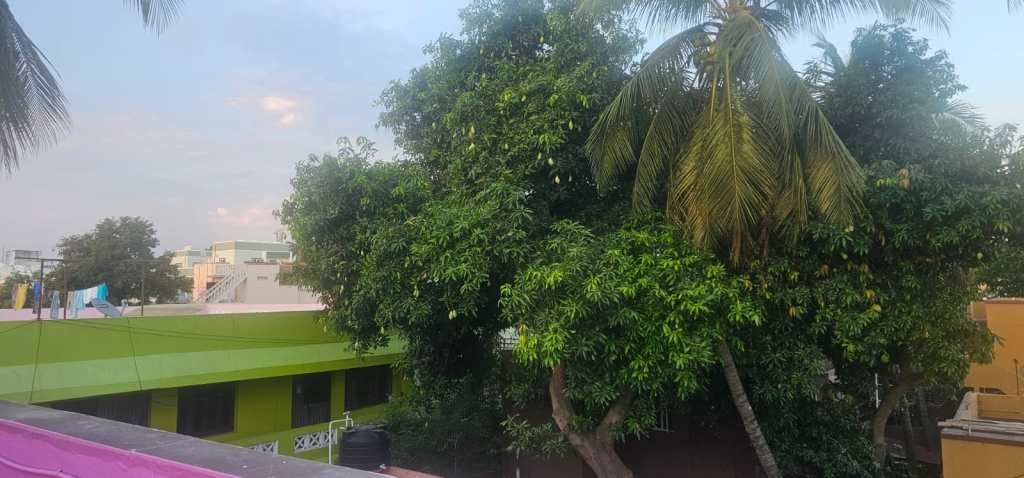
Mango trees (the one in focus is mine the one on the extreme left is the current competitor :)
Every summer in the hot, sweltering heat, the biggest respite for me was the parrots chirping so loudly, overtaking the regular crow gangs in my area. Their bright green color and lively, loud presence were a refreshing change in the routines of my life — a pleasant and welcome disturbance unlike many other things.
This summer, my second longest stay here in 20 years, I found it was not as noisy. The sound of parrots came from a much farther distance, which made me curious. I could see them gathered a few meters away, perched on another mango tree in a neighbor’s backyard the only tree in that space, compared to the multiple trees we had that together formed a denser, larger, more spacious haven. I was hurt a bit and tried to attract them for days using seeds and plenty of water.
But I neither heard nor saw the parrots return. I suspect the squirrels and night rats must have feasted on the seeds, since by the next morning they were gone. I tried changing the times of feeding and adding more appetizing seeds (or so I thought), but the results were the same. I’m sure I earned the squirrel families’ good graces, but the parrots kept flying elsewhere, never back to my tree.
Curious and unwilling to create a rodent problem on my roof, I decided to reflect on my suspicions. The mango tree older than me, at least four decades old had been cut down a few months ago at my aunt’s insistence that it was causing issues (I never knew the full reason). When the woodcutter came with his saw, I was so hurt and angry. The cuckoos that usually arrive in the monsoon might not return without the dense canopy, and I feared we would miss their seasonal chorus. A huge chunk was gone, though I hoped smaller birds might still drop by and rest in the shades of what was left.
Now, I asked my AI conversation partner to search whether plants send out some kind of signal to other living beings — perhaps an unattractive smell, or even a cry of pain. What I found was very interesting!
The mango tree produces alarm : a soft but painful cry. When trees are cut or injured, they release certain chemicals (like ethylene or volatile organic compounds) into the air. These act almost like distress signals, warning nearby plants and subtly influencing insects, animals, and birds. The familiar scent and “presence” of the tree changes, and the birds notice. They listen, they know, and they respect the shift.
What a lesson for us humans : nature communicates in ways we often overlook. Just as birds respond to the altered signals of a tree, we too should learn to sense and honor these messages.
How do we respond to others? Do we see their hidden signals?

